
The short answer
Cabinet painting on Jupiter Island means removing doors and drawers, degreasing and sanding, priming with a bonding primer and spraying a hard enamel in a controlled space. Done carefully, it refreshes custom millwork without replacing it.
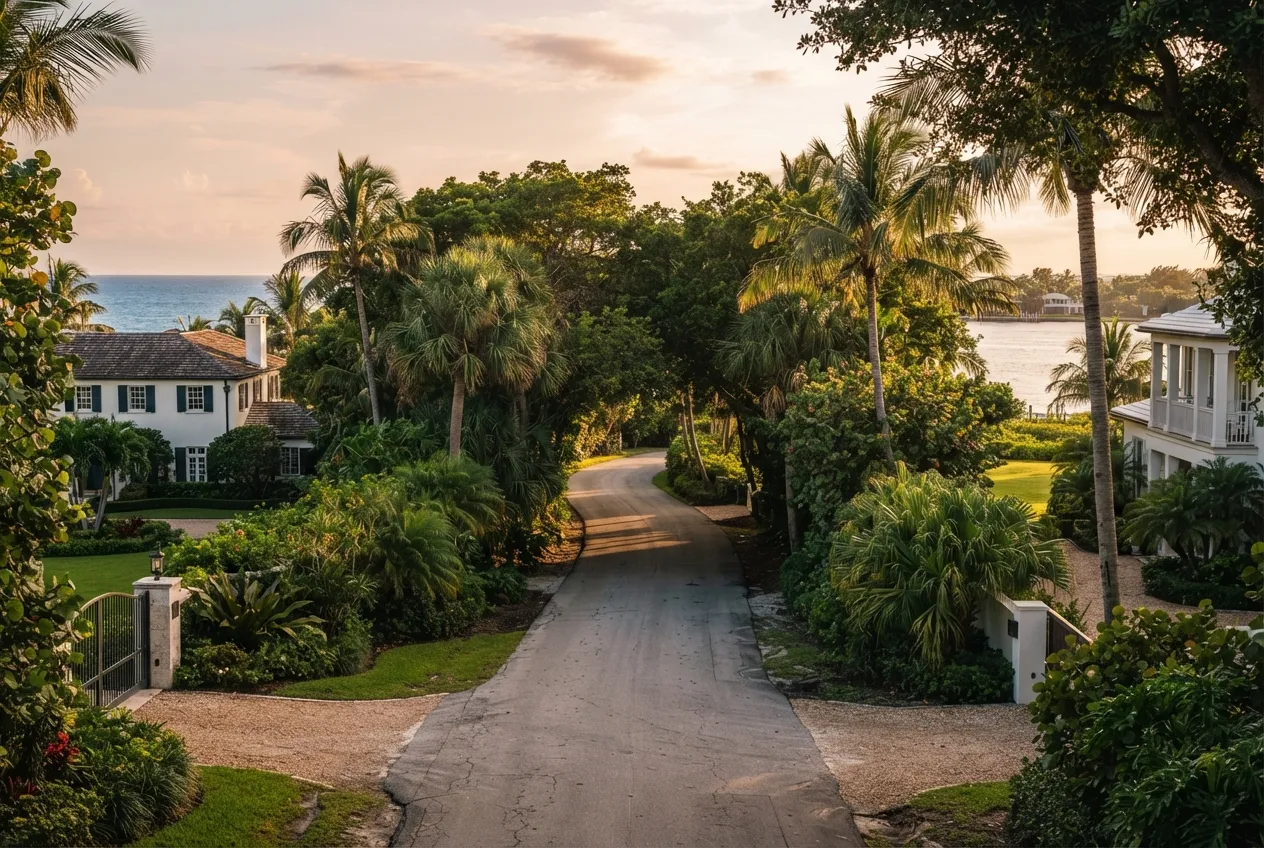
Homes on Jupiter Island tend to carry a lot of millwork. Beyond the kitchen there are butler's pantries, wet bars, laundry rooms, vanities in every bath and paneled libraries that were built to last for decades. When those surfaces look tired, replacing them means tearing out custom joinery that often cannot be matched. Repainting keeps the boxes, the layout and the craftsmanship, and changes only the finish. ClearCoat Painting drives the roughly six miles north from Jupiter into Martin County to refinish cabinetry in island homes, and we treat each piece the way a furniture finisher would: taken apart, cleaned to bare grease-free wood, primed for adhesion and sprayed in thin, level coats. The goal is a surface that looks factory-made, not brushed over, and that holds up to daily use in a house where the windows face open water and the air is never fully dry.
Why custom millwork is worth refinishing instead of replacing
Many island kitchens were built with inset doors, beaded face frames, crown details and furniture-style feet. A cabinet shop can reproduce that look, but the cost, lead time and disruption are significant, and the new boxes rarely fit the old footprint perfectly. Paint solves the part of the problem that is actually visible: color, sheen and wear.
Refinishing also lets you keep stone countertops in place. Pulling cabinets almost always means pulling the tops, and large slabs do not always survive removal. Painting in place avoids that risk entirely.
How humid, salty air changes the prep
A house near the ocean breathes moist air even with the air conditioning running. Wood cabinetry absorbs a little of that moisture, and kitchen cooking adds a film of oils that most cleaners do not fully remove. Paint laid over either problem will look fine for a few months and then start to chip at the edges where hands and hips hit the doors.
Our sequence is built around adhesion first and color second.
- Remove doors, drawer fronts and hardware, labeling each piece to its opening
- Degrease every surface with a cleaner made for kitchen residue, then rinse
- Scuff-sand existing lacquer or varnish so the primer has something to grip
- Fill dings, open grain and failed joints before priming
- Apply a bonding primer suited to the existing finish, then sand it smooth
- Spray two finish coats of a cabinet-grade enamel, sanding lightly between them
Choosing a color that suits light off the water
Strong natural light from large windows makes colors read cooler and brighter than they do on a paint chip. A white that looks warm in the store can turn stark beside a wall of glass facing the Atlantic or the Intracoastal. We suggest testing sample boards on site, viewed in the morning and late afternoon, before committing to a whole kitchen.
Sheen matters as much as color. Satin hides fingerprints and small imperfections; semi-gloss cleans more easily but shows every flaw in the wood underneath. For painted island cabinetry, a satin or low-luster enamel is usually the practical middle ground. Two-tone schemes, such as a darker island with lighter perimeter cabinets, are also simple to execute with paint and let you change the feel of a large kitchen without changing its bones.
Living in the house while we work
Doors and drawer fronts are finished away from the kitchen so the boxes can stay in service for most of the project. The cabinet frames are masked, primed and sprayed in place with the counters, floors and appliances covered. You will have limited kitchen access for a few days, and we plan the schedule with you so that the messiest stages fall on days when you are away or eating out.
Second homes are common on the island. If you are up north while the work happens, we can coordinate access with a house manager and send progress photos so you know where things stand.
Bathrooms, bars and the rest of the house
Vanities take more abuse from humidity than kitchen cabinets do, because steam from showers condenses on them every day. We use the same enamel system but pay extra attention to sealing the bottom edges of doors and the toe kicks, where water tends to sit. Wet bars, mudroom lockers, closet built-ins and library shelving can be folded into the same project so the finishes across the house match in sheen and color.
If you also plan interior wall painting, we sequence cabinets first so wall paint is not damaged by masking tape later. Clients in Jupiter Inlet Colony, Juno Beach and Palm Beach Gardens use the same process, and scheduling nearby jobs together sometimes shortens the wait.
More services in Jupiter Island
- Interior Painting in Jupiter Island
- Exterior Painting in Jupiter Island
- Residential Painting in Jupiter Island
- Commercial Painting in Jupiter Island